Using Column
Why the sidebar comes second
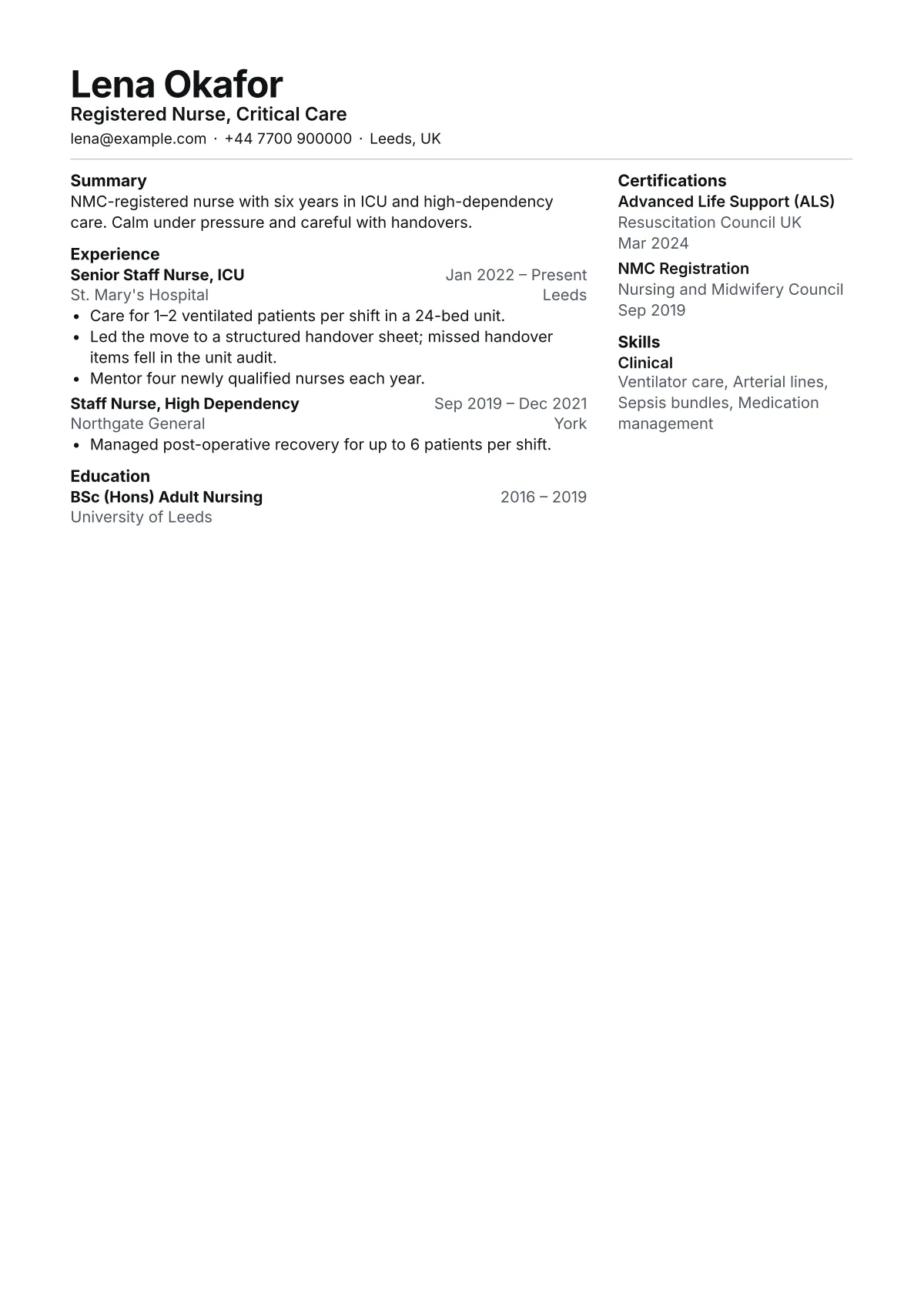
Two-column resumes break parsers when the sidebar is set first, or when both columns are read line by line across the page. Column writes the whole main column, then the whole sidebar, and our tests check that order on every run. There are no skill bars, icons or filled panels, which parsers turn into noise.
How to fill it
Use the sidebar for things a recruiter checks off: registrations with their number and date, certifications, languages, and skills grouped under short labels. Keep the main column for what you did. If a certification is the reason you are hired, such as a nursing registration, list it first in the sidebar.
When to pick another
If you have only four or five skills, the sidebar looks empty and Ledger is tidier. Some employers' portals still prefer a single column; if a job post says so, switch to Ledger in one click and nothing you typed is lost.
Words to use
The layout is half of it. For the terms recruiters search for, see the keyword lists for data analyst, devops engineer and business analyst resumes.
About Column
Are two-column resumes bad for ATS?
They can be, when the text comes out of the PDF in the wrong order. Column sets the main column first in the file, and our parse-back test checks that each job's title, dates and bullets come out in order on every sample.
What goes in the sidebar?
Skills, languages, certifications and awards. Experience, education, projects and the summary stay in the main column.
Can I move a section into the sidebar?
Not yet. The sidebar takes skills, languages, certifications and awards automatically. You can reorder sections within each column.